
In the Beginning, There Was Salt
The Mineral That Built Civilizations: Sea Salt, Science, and the Art of Choosing Well. The question is no longer whether you need salt — you do! It's learning to discern the healthy from the harmful.
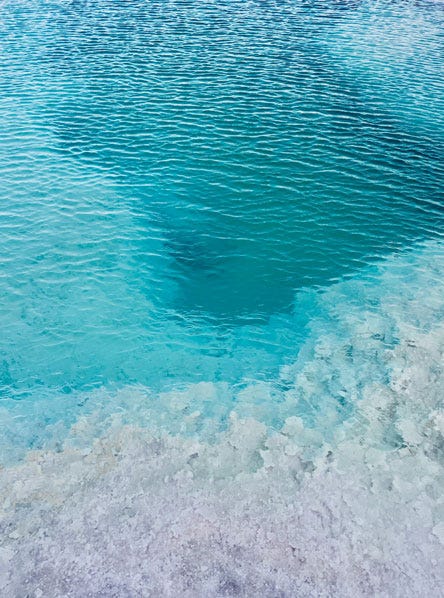
Go back far enough in human history and you will find salt at the center of everything.
As far back as 6,050 BCE, salt shaped civilizations. The Egyptians offered it to their gods. The Phoenicians traded it across the Mediterranean. The ancient Greeks and Hebrews poured it over sacrificial offerings.
Salt was so precious that people paid for it with gold. Wars were fought over it. Roads were built specifically to carry it. One of the busiest roads leading into Rome was the Via Salaria — the Salt Road — where merchants drove oxcarts full of crystals harvested from the sea pans at Ostia.
The Romans valued salt so highly that soldiers received a payment called salarium argentum — an allowance connected to salt — and from that word we get our modern word salary. (Historians debate whether soldiers were paid directly in salt or given money to purchase salt — but either way, salt was the measure of a man’s worth.)
And look at other words we still use today: salute, salary, saliva, salad, salvation, salubrious — all rooted in sal, the Latin word for salt. Salt is not just in our food. It is in our language, our bodies, and our history.
For more on the rich history of salt, read Salt: A World History by Mark Kurlansky. Click Here to learn more!
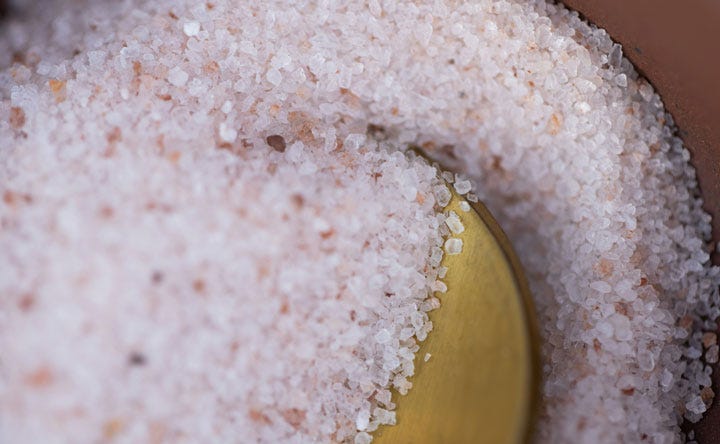
What Salt Actually Does Inside You
I want you to feel this, not just understand it.
Right now, your heart is beating. Your nerves are firing. Your muscles are moving. Every single one of those actions runs on salt — on dissolved mineral ions carrying electrical charge from cell to cell, organ to organ, thought to feeling.
Electrolytes are minerals that carry an electric charge when dissolved in body fluids. They regulate fluid balance inside and outside every cell. They power nerve signals. They trigger every muscle contraction, including the one keeping your heart beating right now.
Sodium is the lead electrolyte. But it does not work alone. Magnesium acts as a cofactor for over 300 enzyme systems in the body, supporting energy production, bone health, sleep, mood, heart function, and blood sugar control. Potassium works alongside sodium to maintain fluid balance and protect against high blood pressure. Calcium drives nerve signaling and keeps bones strong. Chloride teams with sodium to maintain blood pH and power digestion through hydrochloric acid production.
For more detail on the critical Sodium-Potassium Balance, click here: The Importance of the Sodium-Potassium Balance.
Salt also creates saliva — the very first step of digestion. Yet saliva is important for more than digestion. It promotes stronger teeth because saliva carries the minerals needed to continually build up your enamel. Adequate salt and salivation help build the mineral matrix of your teeth and also your bones.
Without adequate sodium and supporting minerals, your body cannot maintain proper hydration or electrical signaling. Low sodium contributes to fatigue, headaches, muscle cramps, brain fog, dizziness, and poor exercise tolerance.
In my Cleanse with Friends Detox Guide, I dedicate an entire section to “The Importance of Salt & Electrolytes” — because this is one of the most misunderstood areas in modern nutrition. People are afraid of salt. But they are afraid of the wrong thing.
The Problem: Modern “Salt” Is Not Salt
Here is the truth that the food industry does not advertise.
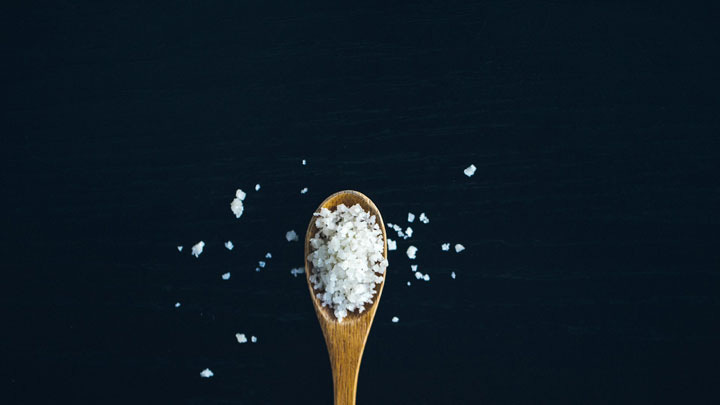
The white powder in a standard table salt shaker is not really salt. It is a heavily processed industrial product. When manufacturers refine salt commercially, they remove all trace minerals as “impurities.” They heat the salt to 1,200 degrees Fahrenheit — 648 degrees Celsius — stripping away every mineral except sodium and chloride. What remains is 99.5% pure sodium chloride.
Then they add things back in. Anti-caking agents keep it from clumping — substances like sodium ferrocyanide, calcium silicate, and sodium aluminosilicate. Synthetic iodine gets added. Sometimes dextrose — a sugar — gets added to stabilize the iodine.
The European Food Safety Authority (EFSA) flagged in 2018 that silicon from calcium silicate — one of those anti-caking agents — can accumulate in the kidneys and liver, and that nanomaterials in calcium silicate need further investigation. Unfortunately, some studies also show that anti-caking agents degrade vitamin C in foods they contact.
More importantly, refined salt is stripped of the minerals that buffer sodium in the body. Dr. David Brownstein, holistic medicine practitioner, authored the book Salt Your Way To Health. Here, he explains that the compound sodium chloride, in its isolated, processed form, does not resemble anything found in nature. Without its mineral partners, sodium behaves differently — and this is likely a major reason why research links processed salt intake to hypertension and cardiovascular disease, even while natural mineral-rich salt tells a very different story.
I want to be clear: salt itself is not the enemy. Refined, denatured, additive-loaded, industrial sodium chloride is the problem. And most people eat it every single day without realizing what they are actually consuming.
What Real Salt Looks Like
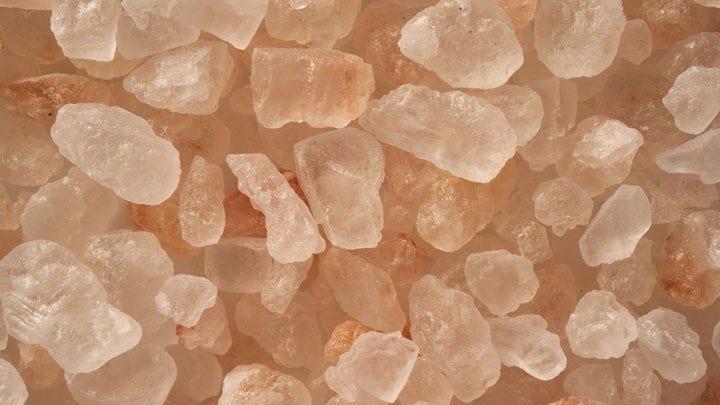
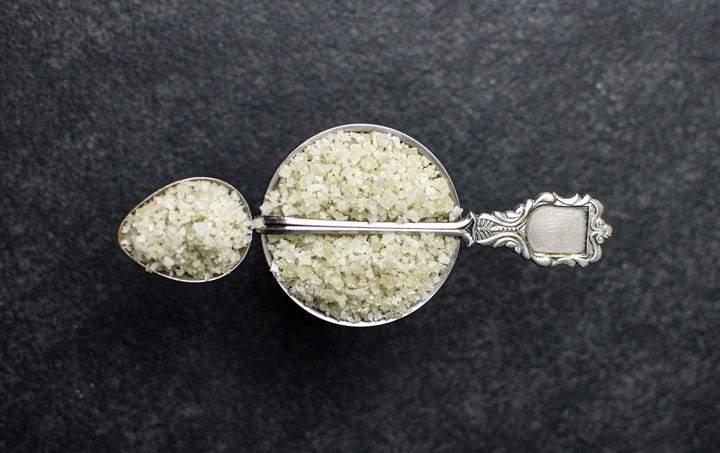
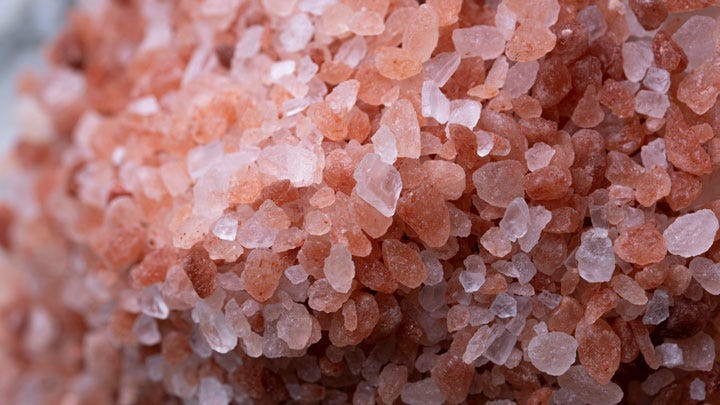
Real salt looks nothing like white powder. Real salt sparkles. It comes in pink, grey, black, red, amber, and crystal-clear. It is coarse and irregular, formed over millions of years by the forces of geology, sun, wind, and water.
Unrefined natural salts retain their full mineral spectrum — magnesium, potassium, calcium, iron, zinc, iodine, selenium, manganese, copper, boron, and dozens more trace elements that support antioxidant defense, hormone function, cellular metabolism, and enzyme activation.
Unrefined salts have a coarser texture and a milder, more complex taste than table salt. They satisfy the palate more deeply — which means you naturally use less. Your body is not just tasting sodium. It is tasting the full mineral matrix and registering genuine nourishment.
This is why, in my detox teachings, I consistently pair sea salt with fresh vegetables, greens, herbs, and healthy fats. A plate of fresh produce drizzled with olive oil and sea salt is not only delicious; it also delivers minerals that support digestion, hydration, and nutrient absorption from everything else on the plate.
The diversity of natural salts across the world is extraordinary — and that diversity matters. Different salts carry different mineral profiles depending on where they formed. Arctic sea salt carries different minerals than tropical Pacific sea salt. Mountain salt compressed over millions of years inside ancient seabeds holds a different profile than spring salt rising from underground mineral veins. Lake salt from one of the most saline bodies of water on earth concentrates minerals differently than a river salt or a desert salt buried in sand for centuries.
This is the insight behind Master Salt — a premium blend of 40 — 40! — exceptional unrefined salts sourced from pristine environments across the globe, formulated to deliver mineral diversity that no single salt can achieve alone.
The 40 Salts: A World in a Jar
Master Salt is sourced from seven distinct salt categories across 40 locations worldwide. Each salt carries the mineral fingerprint of its unique geological home.
Sea Salts form the largest group — 19 salts drawn from the waters of South Africa, Slovenia, Wales, New Zealand, India, Portugal, Ibiza, France (Île de Ré), Iceland, Fiji, the Philippines, Norway, Tasmania, the Canary Islands, Ireland, Bora Bora, and Madagascar. Cold Arctic waters produce different mineral profiles than warm tropical seas. Each carries its own character.
Mountain Salts come from Persia, Bolivia, Pakistan, Appalachia (West Virginia, USA), Turkey, and Germany. These are ancient ocean salts, compressed inside mountain walls over millions of years as prehistoric seas evaporated. Patient. Dense. Foundational. Master Salt notably excludes Himalayan pink salt due to concerns about unregulated mining practices and potential contamination — sourcing its mountain salts from carefully monitored origins instead.
Lake Salts come from Djibouti in East Africa and Bolivia — landlocked bodies where evaporation concentrates minerals to extraordinary densities. The Djibouti lake salt comes from one of the saltiest bodies of water on earth.
Spring Salts from Peru, the Basque Country, Alicante, Portugal, and Turkey form deep underground in mineral-rich water veins, rising to the surface laden with elements from far below.
Desert Salts from Morocco, South Africa, and Namibia carry the mineral signatures of ancient landscapes baked by millennia of sun.
River Salt from Australia’s Murray River brings its own unique profile from one of the Southern Hemisphere’s great waterways.
Oasis Salt from Egypt — reportedly buried in desert sand for hundreds or possibly thousands of years. And Volcanic Salt from Indonesia — born deep underground, pushed up through a mud volcano like a geyser, historically harvested exclusively for Indonesian royalty in the 1800s.
Each salt has its own mineral ratio. Certain salts carry more potassium. Others carry more magnesium, selenium, zinc, calcium, or copper. Eating only one type of salt for years — even a good one — can create mineral imbalances over time. A diverse blend delivers the full spectrum.
The Science of Mineral Diversity
The Master Salt approach is grounded in a principle I talk about constantly: aim for mineral-rich blood, not mineral-poor blood.
Full-spectrum sea salts contain trace minerals including iron, zinc, iodine, selenium, manganese, copper, and boron — elements that support antioxidant defense, hormone function, cellular metabolism, and enzyme activation.
One of the most fascinating aspects of mineral-rich salt is how minerals work together through a process called biotransmutation — minerals bonding with other minerals in the body to form new compounds and drive biological processes. The Master Salt website highlights three compelling examples:
Fluoride and Calcium — naturally occurring fluoride in unrefined salt binds with calcium to strengthen tooth enamel. This is fundamentally different from synthetic fluoride added to municipal water and toothpaste.
Lead and Selenium/Zinc — lead, when it enters the body through environmental exposure, binds with selenium and zinc in mineral-rich blood and gets excreted. Mineral-rich blood provides the binding partners that neutralize and remove heavy metals naturally.
Aluminum and Silica — aluminum from environmental exposure binds with silica and gets removed through normal bowel function.
These are not fringe claims. They reflect established principles of mineral biochemistry — and they suggest that mineral-rich blood may be genuinely protective in ways that go far beyond basic electrolyte function.
Keep reading with a 7-day free trial
Subscribe to David Avocado Wolfe to keep reading this post and get 7 days of free access to the full post archives.