
Herbal Thursday: Cloves
Tiny Buds, Mighty Benefits: Cloves Deserve a Place in Your Wellness Routine. Explore the history, active compounds, and researched health benefits of this timeless spice.

When you open a jar of cloves, the smell hits you first: warm, sharp, and even festive. It’s definitely a smell for the holidays. These little flower buds have been treasured for thousands of years, not just for flavoring food, but for their remarkable health-supporting properties. Today, modern science is starting to back up what ancient cultures already knew: clove is more than just a spice for pumpkin pie.
A Spice with a Story
Cloves come from the unopened flower buds of the evergreen tree Syzygium aromaticum, native to what was once called the Spice Islands in modern-day Indonesia. For centuries, cloves were worth their weight in gold. They became a much-sought commodity, carried along the silk road and appearing in Chinese medicine texts as early as 200 BCE. Beyond medicine, cloves also became famous in the kitchen. (1)
In Europe, they became a centerpiece of medieval cooking creations. Think gingerbread cookies, mulled wine, or pumpkin pie spice. Cloves add that sweet, fiery kick. You can easily find simple crafts to create with cloves, too, like poking whole cloves into oranges to make natural air fresheners.
What’s Inside Cloves?
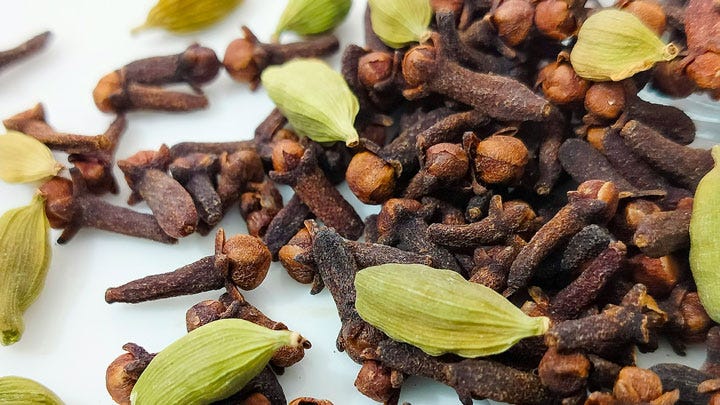
The real power of clove comes from its natural plant compounds. Eugenol is the star compound, making up 70–90% of clove essential oil. Eugenol is known for its strong antioxidant and antimicrobial actions. In fact, it’s one of the most powerful germicidal agents in Nature and was an early treatment in dentistry for toothaches and gum pain. (2)
Cloves are also packed with polyphenols, plant-based antioxidants that help protect cells from free radical damage. Together, these compounds explain why cloves have such a long reputation as a healing spice. (3)
Powder, Extract, or Essential Oil?
Whole Buds & Powder: This is the form you find in the grocery store isles. You can find little spice jars of cloves in whole form, in a powder, or in spice flavor combinations. When used in cooking, the eugenol and polyphenols enhance flavor and the nutrient profile of any food, though at lower concentrations compared to extracts or essential oil. Also, since it doesn’t take much clove powder to add that distinctive flavor, you probably aren’t getting a generous amount in a serving of pumpkin pie.
Clove tends to overpower other flavors, so taste test if you’re using it in a recipe for the first time.
Culinary doses still provide antioxidant support. While research on antiparasitic effects is almost entirely based on stronger preparations. (4)
Extracts (water or alcohol based): Water and oil extraction brings out different compounds from any plant, as some compounds are fat soluble and some are water soluble. A combination of the two offers the greatest spectrum of nutrients and active compounds. But regardless, studies show clove extracts can slow the growth of bacteria and fungi and provide strong antioxidant effects in laboratory settings. What better test than on food that has not been preserved? Clove extract effectively inhibits microbes that would otherwise spoil food. (5)
Essential Oil: This is the most potent form, with eugenol dominating its chemical profile. Different extractions affect the chemical composition of clove essential oil (CEO), especially its key compounds. CEO offers several bioactive properties, including antimicrobial, antioxidant, anti-inflammatory, analgesic, and insecticidal effects. Specifically, CEO kills bacteria, fungi, and even certain parasites and shows promise as a food preservative. (6)
Clove Health Benefits
1. Oral Health
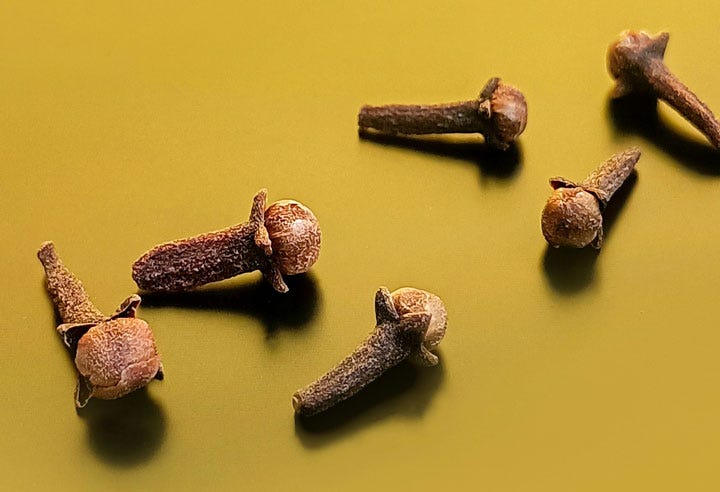
Cloves are best known for their role in oral health. If you have an ongoing infection in your mouth, clove will safely reduce bacteria. Eugenol, the main compound in clove essential oil, has long been used in dentistry to help with tooth pain. Modern research confirms that clove-based rinses and gels can reduce harmful bacteria in the mouth and may help manage plaque and gum inflammation. (7)
Interestingly, temperature also influences the process. When the heat goes up, the integrity of the cell membrane may be compromised. And that means the eugenol in clove oil can more easily penetrate microbes and kill them. (8)
2. Antibiotic Effect
Cloves are also incredibly rich in antioxidants, boasting a high percentage of polyphenols other than eugenol. These natural compounds protect cells from oxidative stress, scavenging free radicals, which contribute to aging and many chronic diseases. Laboratory studies consistently show that clove extracts have some of the highest antioxidant activity among common spices. (9, 10)
Have some clove powder directly, adding a teaspoon to your Golden Milk recipe.
3. Anti-Parasitic Potential
Another exciting area of research is clove’s anti-parasitic potential. In test-tube studies, clove essential oil and eugenol have been shown to disrupt parasites such as Giardia lamblia and Trypanosoma cruzi, which is the cause of Chagas disease. It follows that since cloves can disrupt parasites and microbes, it can also help treat diseases caused by various bacteria and fungi, including E. coli and Candida overgrowth. Some animal studies suggest eugenol derivatives can reduce parasite loads in infected tissues. (11, 12)
One important study proves the importance of cloves in the proprietary formulation of Remove Unwanted Guests (RUG). Scientists have discovered that clove dissolves the eggs left behind by parasitic worms. In fact, researchers believe clove oil is one of the only natural oils that can completely destroy parasitic eggs. (13)
Safety First
Culinary use of clove powder or whole buds is safe and beneficial. However, clove essential oil must be used carefully, since the high concentration of eugenol can be toxic in high amounts. The World Health Organization has set a safe daily intake level for eugenol at up to 2.5 mg per kilogram of body weight. Too much eugenol can harm the liver, and accidental ingestion of clove oil has caused serious side effects in children. (14)
The Bottom Line
Clove connects the old and the new. Ancient Chinese doctors recommended cloves for digestion and fresh breath. In Ayurveda, clove supported breathing and circulation. Today, scientists are validating its antioxidant and antimicrobial powers. And of course, cloves continue to warm kitchens around the world in pumpkin pies, chai teas, and mulled ciders.
Sure, cloves may be small, but they are mighty. From a polyphenol-rich spice to a eugenol-packed essential oil, each form offers unique benefits. Science supports strong antioxidant and antimicrobial activity, with early evidence points to antiparasitic potential. Used wisely, clove remains both a beloved spice and a natural ally for wellness.
These statements have not been evaluated by the Food and Drug Administration. This information and any related products are not intended to diagnose, treat, cure, or prevent any disease.
Join the David Avocado Wolfe Substack Community
This is where transformation begins — are you ready to join us?
Wolfe University
Ready to go all-in? Experience the new Wolfe University with both free and paid courses, as well as the platform for David Wolfe's Inner Circle.
David Avocado Wolfe Links
David Wolfe Website: https://www.davidwolfe.com/
Wolfe University: https://university.davidwolfe.com/
David Wolfe Shops
US: https://shop.davidwolfe.com/
UK: https://davidwolfe.uk/
Our favorite Chocolate Factory is now located in Central Florida! Please visit Butler’s Raw Chocolates! 2400 South Hopkins Avenue, Unit E, Titusville, FL 32780
Butler’s Raw Chocolates: https://butlersrawchocolates.com/
Links on this page may be affiliate links; any proceeds support the work of David Avocado Wolfe.
Wondering if I can grow my own clove tree in mid-atlantic region of U.S.? Finding little success at my local markets for either whole or ground cloves; I am hopeful here n the fall season I may be able to buy locally. I quite often grind whole cinnamon bark and use in cooking when powdered cinnamon is either unavailable or only at ridiculously high price for very small amount.