
Herbal Thursday: Marshmallow Root
What does a marsh-loving plant have to do with s'mores? The thick, sweet taste of the Marshmallow Root led to one of world's favorite treats. Yet this demulcent herb was long a star in its own right.
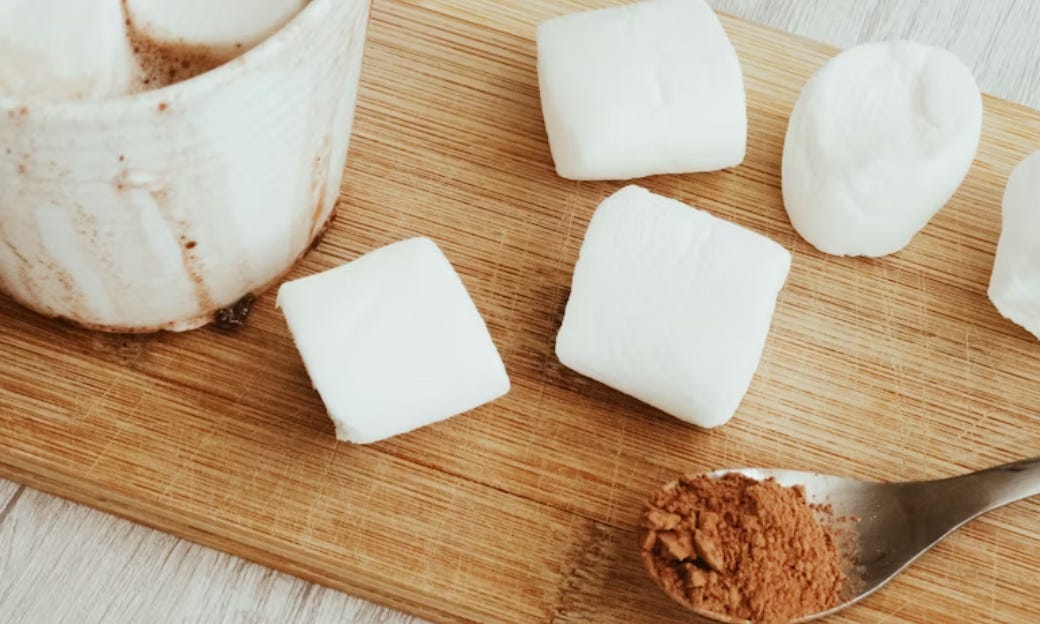
When you hear the word marshmallow, “healing herb” may not be the first thing that comes to mind. The mallow plant, inhabiting marshy, wetland areas, offered its sap-filled root as both medicine and treat to ancient cultures.
Yet when it comes to demulcent herbs — plants that soothe, coat, and protect irritated tissues — marshmallow root stands in a class of its own.
Used for over 2,000 years, beginning in Egypt and migrating to Europe and Asia, Marshmallow Root (Althaea officinalis) provides an exceptional ability to calm inflammation, moisten dryness, and shield delicate mucous membranes. Modern research now confirms what traditional herbalists have long observed: marshmallow root is one of the most mucilage-rich medicinal plants known, making it a cornerstone herb for gut, throat, urinary, and respiratory support.
What Is Marshmallow Root?
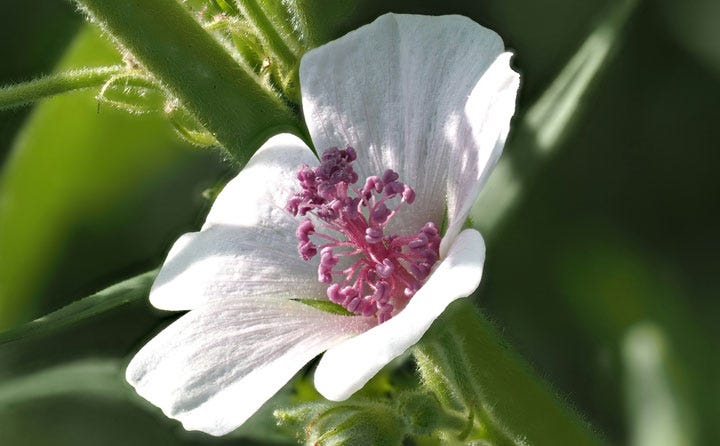
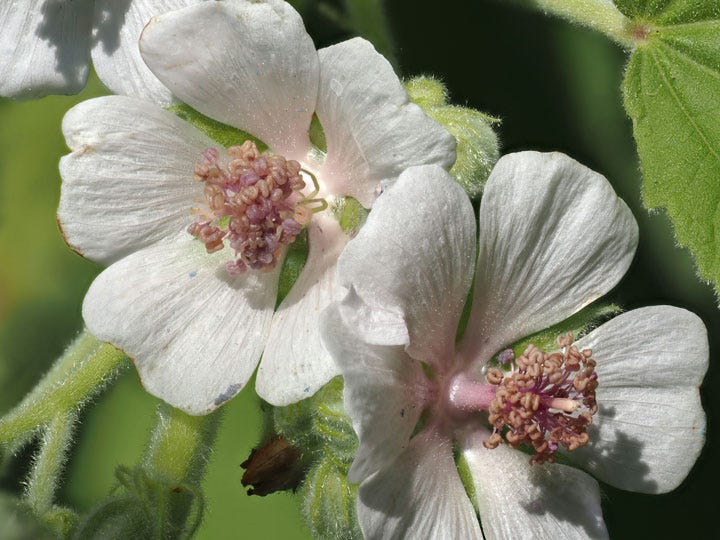
Marshmallow (Althaea officinalis) is a perennial herb in the Malvaceae (mallow) family, native to North Africa, Europe, and Western Asia. The root — harvested in autumn — is the most medicinally potent part, though the leaves also contain mucilage.
What is “mucilage”? It doesn’t sound very tasty, but this characteristic of demulcent herbs — such as aloe vera and flaxseed — explains its benefits
Mucilage is a gel-forming, water-soluble substance made of plant polysaccharides that, once soaked in water, coats, soothes, and protects tissues. Polysaccharides are large carbohydrate molecules made of many linked sugar units that form structural, protective, or gel-like substances in plants. We don’t use them like simple sugars for energy; instead, they provide us with other nutrient and health benefits.
Have you heard about using water-soaked flaxseed as a substitute for eggs in vegan recipes? That’s mucilage going to work. The gelatinous “flax egg” replaces the goopy egg whites, while also acting as a binding agent and an emulsifier, while also contributing moisture to recipes — just like eggs! You could probably make a marshmallow egg, too, and maybe even with better results.
Marshmallow root is especially rich in water-soluble polysaccharides, which swell dramatically when exposed to water and form a soft, slippery gel. Pharmacopoeias recognize marshmallow specifically for this property.
Why Marshmallow Root Is the Ultimate Demulcent
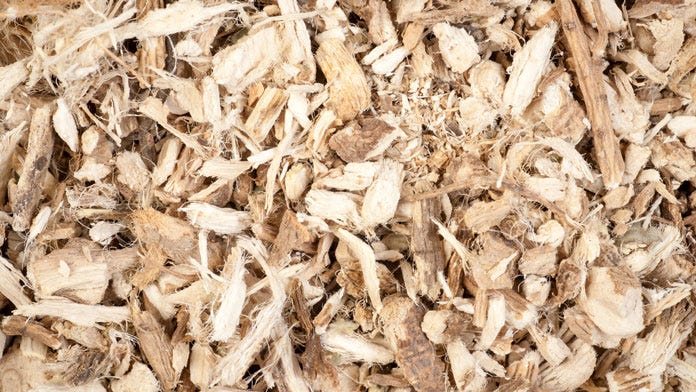
A demulcent is defined as a substance that relieves irritation by forming a protective, soothing film over mucous membranes. Marshmallow root excels at this due to its very high mucilage content. Analytical studies show marshmallow root contains approximately 20–35% mucilage polysaccharides, depending on harvest and extraction method. Mucilage creates a temporary physical barrier that:
Reduces friction
Protects irritated tissue
Allows inflammation to settle
Supports natural tissue repair
This mechanism is mechanical and physiological — not pharmacological — which explains marshmallow’s remarkable safety profile.
Here are 4 Health Benefits of Marshmallow Root
1. Digestive Tract Support (Stomach & Intestines)
Marshmallow root is one of the most respected herbs for soothing irritated tissues in the digestive tract. When taken internally, its mucilage-rich polysaccharides absorb water and form a soft, slippery gel that coats the lining of the esophagus, stomach, and intestines. This protective layer helps reduce friction and irritation, giving inflamed tissues a chance to rest and recover. For this reason, herbalists over time have turned to marshmallow root for conditions involving gastric irritation, acid discomfort, and inflammatory bowel sensitivity.
While marshmallow root does not treat disease directly, its soothing, protective action makes it a valuable supportive herb in protocols focused on gut comfort and mucosal integrity. As part of a comprehensive herbal protocol, it can even help to heal leaky gut.
2. Throat, Cough, and Respiratory Soothing
Marshmallow root has a long and well-documented history of use for dry, irritated coughs and sore throats. Its demulcent gel coats the mucous membranes of the throat and upper respiratory tract, helping to calm irritation that can trigger coughing or hoarseness. Unlike stimulant expectorants, marshmallow does not force mucus out. Instead, it soothes and moistens dry tissues, reducing irritation at the sensory nerve endings that initiate the cough reflex.
Marshmallow’s protective nature reduces irritation in the throat, making this root especially appropriate for dry coughs, vocal strain, and post-viral throat sensitivity, where tissues are inflamed but not congested.
3. Urinary Tract & Bladder Support
The soothing effects of marshmallow root extend beyond the digestive and respiratory systems. Traditional herbal texts describe its use for calming irritation in the urinary tract, particularly in cases of mild bladder discomfort or inflammation. You see, the mucilage isn’t fully broken down during digestion, and so as it goes through the urinary system, it can provide a gentle, protective effect along the way.
Herbal pharmacology sources characterize marshmallow root as an anti-irritant that supports comfort in inflamed or sensitive urinary tissues, especially with burning or discomfort without infection.
4. Anti-Inflammatory and Antioxidant Properties
Although marshmallow root is best known for its mechanical demulcent action, it also contains flavonoids, phenolic acids, and other secondary compounds that exhibit antioxidant and anti-inflammatory activity in laboratory studies. These compounds may help reduce oxidative stress and support tissue repair processes at a cellular level.
Research published in the journal Frontiers in Pharmacology has demonstrated that extracts of Althaea officinalis show measurable anti-inflammatory and antioxidant effects in experimental models.
Laboratory studies show anti-inflammatory and antioxidant activity, which may further support tissue healing. Enjoying a cup of marshmallow root tea may be a simple daily habit that staves off infection.
Caution? Gentle, Food-Like Safety Profile
One of the reasons marshmallow root holds such a central place in traditional herbalism is its remarkable gentleness. It is non-stimulating, non-astringent, and generally well-tolerated across age groups when used appropriately. Because its primary action is physical rather than chemical, marshmallow root imparts a food-like quality that supports the body without forcing change.
However, there is one caution: marshmallow’s mucilage may slow the absorption of medications taken at the same time, due to its coating action on the digestive lining. So just be sure to space medications and marshmallow root preparations 1–2 hours apart.
How Marshmallow Root Is Traditionally Prepared
Because mucilage is water-soluble and heat-sensitive, traditional herbalists often prefer:
Cold infusion (best for demulcent action)
Long, gentle soaking rather than boiling
This preserves the full gel-forming capacity of the root.
But what about the Marshmallow?
As a fairly sweet, sticky, and gelatinous substance, mucilage from marshmallow root played a role in sweet treats for millennia.
Thanks to True Treats Historic Candy Shop in Harpers Ferry, West Virginia, for finding this recipe gem from 1864:
Marshmallow Syrup — adapted here to draw the herb back to its more healing roots.
4 oz. fresh marshmallow roots, cleaned and finely sliced (or 1 oz. dried)
Optional: 1 oz. goji berries and / or 1 oz. licorice root
Bring 4 cups fresh spring water to a simmer. Add marshmallow root and optional herbs. Remove from heat, cover, and steep 20-30 minutes.
Allow the liquid to cool slightly, which will let the marshmallow thicken slightly. Strain.
Stir in 1/2 cup raw honey, or to taste.
This produces a “syrup” that you can pour on warm oatmeal, into elixirs, or over “nice-cream.” As you learn about how well your marshmallow root thickens, use more or less to create the consistency you want.
Use sparingly at first — remember, this is a medicinal herb, too.
Here’s the Original Recipe: “Fresh mallow roots eight ounces, water one quart, sugar three pounds. Cleanse the roots, and slice them; make a decoction (See Decoctions), boiling it a quarter of an hour, so as to obtain the mucilage of the root; strain, and finish as wormwood. One ounce of liquorice-root and one ounce of white maidenhair, with a few stoned raisins, may be added.”
Marshmallow Root vs. Other Demulcents
Marshmallow root is often considered the benchmark demulcent against which others are compared — including slippery elm, aloe vera gel, plantain, and flax.
What makes marshmallow unique is the combination of extremely high mucilage content plus neutrality plus safety, allowing it to be used broadly for different health needs.
Final Thoughts
Marshmallow root is not flashy. It doesn’t stimulate, purge, or force the body to change. Instead, it does something profoundly important and often overlooked in healing: it protects. It allows irritated tissues to rest and recover.
In a world full of harsh inputs and chronic irritation, marshmallow root remains one of herbalism’s most elegant answers — a quiet, powerful reminder that sometimes the best medicine is simply a soft place to land.
These statements have not been evaluated by the Food and Drug Administration. This information is not intended to diagnose, treat, cure, or prevent any disease.
Our February 18 — March 4 Cleanse with Friends is LIVE! For this Cleanse, we added a 3rd Bonus Week & a 4th Bonus Call on March 11th!

Join the Winning Team: The sooner you register, the more value you get! Our private Telegram group is already buzzing. Now through Feb. 18, we’re prepping to clear parasites, flush the colon, shed the weight, and raise our frequency together.
Start 2026 by nourishing your spirit and detoxifying your mind. Visualize your ideal self — then achieve it!

Mark your calendars! My groundbreaking Health & Rejuvenation Conference returns March 27–29, 2026 — now in Titusville, Florida!
Please Join Us!! All Welcome!
https://shop.davidwolfe.com/products/david-wolfes-health-rejuvenation-conference-march-2026
Join the David Avocado Wolfe Substack Community
This is where transformation begins — are you ready to join us?
Wolfe University
Ready to go all-in? Experience the new Wolfe University with both free and paid courses, as well as the platform for David Wolfe's Inner Circle.
David Avocado Wolfe Links
David Wolfe Website: https://www.davidwolfe.com/
Wolfe University: https://university.davidwolfe.com/
David Wolfe Shops
Australia: https://davidwolfe.com.au/
Our favorite Chocolate Factory is now located in Central Florida! Please visit Butler’s Raw Chocolates! 2400 South Hopkins Avenue, Unit E, Titusville, FL 32780
Butler’s Raw Chocolates: https://butlersrawchocolates.com/
Links on this page may include affiliate links; any commissions earned are at no extra cost to you and support the continuing work of David Avocado Wolfe.